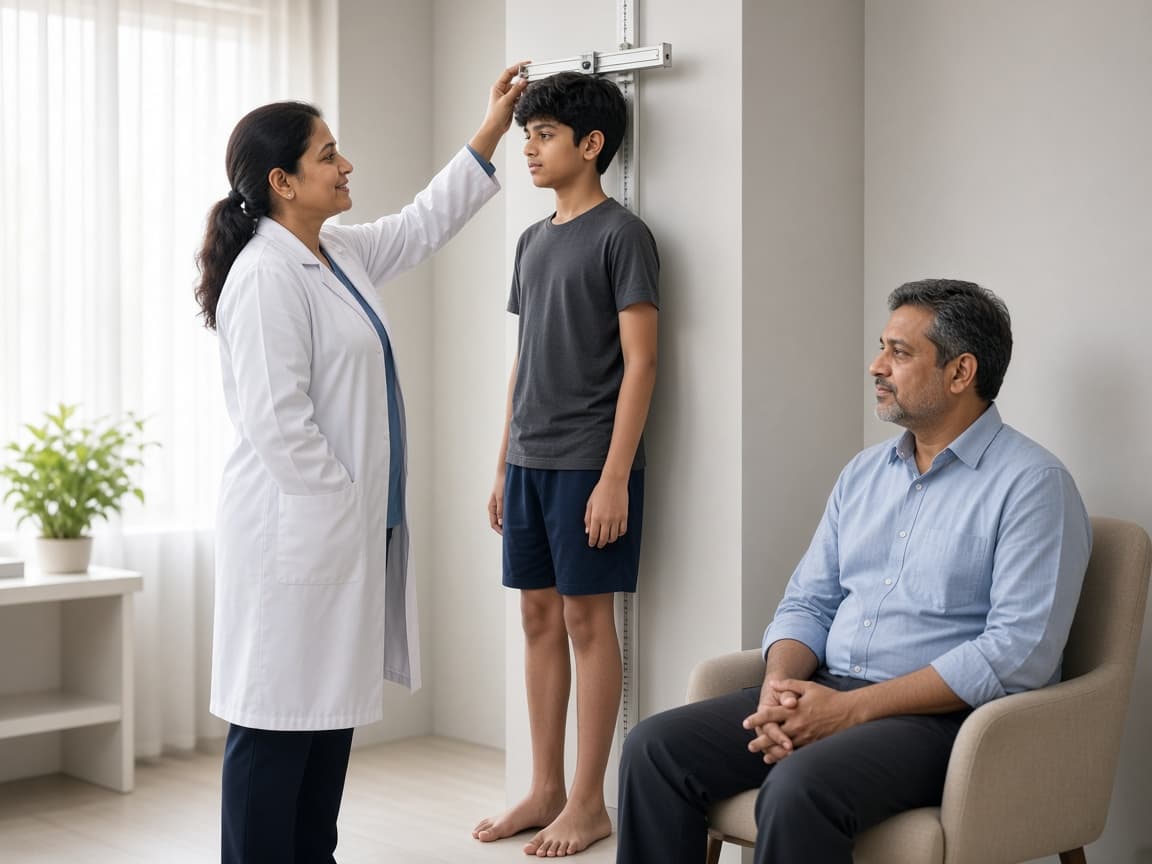
Adolescent health assessment
Adolescent health assessment reviews growth, energy, mood-related concerns, sleep and overall wellbeing in a respectful, age-appropriate setting. Conversations balance privacy with parental involvement so teens feel comf
Service 09
Growth, puberty questions, school health and wellness guidance in a supportive setting.

At a glance

Service overview
Adolescent and preventive health care supports teens through growth, puberty-related questions, school health needs and lifestyle guidance, balancing privacy with parental involvement.
School-age children and adolescents needing preventive or growth-related consultations.
Timely, clear pediatric guidance helps families manage concerns confidently and know when closer attention is needed.
Key benefits
Conversations suited to teen comfort and parental involvement.
Clear explanations of physical changes and timing.
Check-ups considering energy, attendance and readiness.
Practical advice on sleep, screens, activity and nutrition.
Stay-well habits and timely attention to new symptoms.
Support that helps teens and parents move forward together.
What is included

Adolescent health assessment reviews growth, energy, mood-related concerns, sleep and overall wellbeing in a respectful, age-appropriate setting. Conversations balance privacy with parental involvement so teens feel comf

Puberty and growth evaluation helps families understand physical changes, growth spurts and timing concerns during adolescence. Assessment reviews growth patterns and developmental stage with clear, sensitive explanation

School health check-ups support readiness for classroom demands by reviewing growth, vision or hearing concerns when relevant, nutrition and general wellbeing. Visits help identify issues that may affect learning, energy
How it works
Tell us what you have noticed - symptoms, feeding, sleep, growth or development questions.
A careful history and examination help clarify likely causes and urgency.
You receive practical home guidance, warning signs and follow-up timing.
We outline when to return, call, or seek emergency care if things change.
Why choose us
Fellowship-trained newborn expertise that strengthens early childhood care.
Recommendations grounded in current pediatric practice - without exaggerated claims.
Time to ask questions and leave with a plan you understand.
Evening clinic hours at Magenta Superspeciality Clinics, Puppalaguda.
In-depth guide
Educational information to help parents understand this area of care. It does not replace a personal medical consultation.
Adolescent and preventive health consultations at Dr. Lavanya Kids Care in Puppalaguda support teens and school-age children through growth, puberty questions, school health needs, and lifestyle guidance. The setting near Manikonda is designed to feel respectful so adolescents can ask questions without embarrassment while parents remain appropriately involved. Care focuses on listening, clear explanation, and practical habits rather than judgement.
Teen years bring rapid physical change, shifting sleep patterns, academic pressure, and evolving independence. A structured visit reviews growth, energy, mood-related concerns when raised, sleep, nutrition, and overall wellbeing in an age-appropriate way. Families leave with a clearer sense of what often looks typical for adolescence and when follow-up may help.
Preventive care also creates space to discuss immunization review, activity, screen balance, and emerging health questions before they become crises. If a teen develops severe breathing difficulty, chest pain with collapse, sudden neurological symptoms, or other emergency features, immediate emergency medical care is required. Clinic visits support ongoing health; they do not replace emergency pathways. Teens are encouraged to identify one or two health goals they actually care about-better sports stamina, steadier sleep, or fewer headaches-so preventive advice feels personally relevant rather than parental only.
Adolescent health assessment balances privacy with parental partnership. Teens are encouraged to share concerns in a respectful environment, while caregivers receive guidance on supportive home routines. Conversations may cover fatigue, appetite shifts, sports participation, menstrual questions when relevant, and how school schedules affect sleep and meals.
The goal is early attention to emerging issues with practical recommendations teens can realistically follow. Rigid rule lists often fail; collaborative goal-setting works better. Small improvements in sleep timing, hydration, or meal regularity can meaningfully support concentration and mood across a demanding school term in Hyderabad.
When symptoms persist-ongoing unexplained weight change, marked withdrawal, severe headaches, or declining school function-follow-up helps decide whether further evaluation is needed. Honest counseling avoids minimizing real concerns while also avoiding dramatic language that heightens fear without adding clarity. Exam seasons and board preparation weeks are discussed explicitly, because temporary routine collapse around academics is common and can be planned for with more protective sleep and meal anchors.
Adolescent preventive care works best as an ongoing relationship rather than an occasional crisis response, especially through years when academic load, social change, and physical development arrive together. Teens served around Puppalaguda and Manikonda are encouraged to treat health check-ins as normal maintenance, similar to school planning, so stigma around asking questions fades. Parents are supported in stepping back just enough to let adolescents practice self-advocacy while still providing supervision, transportation, and escalation to emergency medical care whenever true red flags appear.

Puberty and growth evaluation helps families understand physical changes, growth spurts, and timing concerns during adolescence. Assessment reviews growth patterns and developmental stage with sensitive explanation. Parents and teens receive reassurance where progress appears expected, along with guidance when earlier or delayed changes deserve closer review.
Practical advice supports healthy nutrition, rest, and follow-up planning through this stage. Growth can feel uneven from one term to the next, and comparisons with peers often fuel unnecessary worry. Clear pediatric perspective helps separate normal variation from patterns that merit additional attention.
Teens appreciate being spoken to directly. Including them in the conversation builds trust and improves adherence to lifestyle recommendations. If rapid deterioration, fainting with injury, severe abdominal pain, or other acute red flags appear, families should seek emergency medical care promptly rather than waiting for a growth-focused appointment. Menstrual health questions, when relevant, are handled with dignity and clear medical language so adolescents know when patterns are expected and when review is appropriate.
Hydration, breakfast quality, and consistent bedtime windows are revisited often because these fundamentals strongly influence concentration, headache frequency, and mood stability during demanding school terms across Hyderabad. Small, repeatable habits usually outperform ambitious resolutions that fade within a week, and follow-up visits help lock those habits in with accountability that still feels supportive.
School health check-ups support readiness for classroom demands by reviewing growth, nutrition, general wellbeing, and vision or hearing concerns when relevant. Visits help identify issues that may affect learning, energy, or attendance. Parents receive practical recommendations and clear next steps for findings that need attention.
Academic calendars in Hyderabad can be intense, with exams, tuition, and extracurricular commitments compressing rest. Preventive visits help families spot fatigue patterns early and adjust routines before burnout becomes the only signal. Guidance stays realistic for local school culture rather than idealised schedules that ignore real constraints.
A smoother school year is more likely when health questions are addressed before they escalate into frequent absences. Continuity with the same pediatric clinic also helps track whether interventions helped across terms, creating a more reliable picture than fragmented one-off advice. Body image conversations stay careful and non-shaming, focusing on health markers such as energy, growth, and strength instead of appearance-driven targets that can become harmful.
Adolescent preventive care works best as an ongoing relationship rather than an occasional crisis response, especially through years when academic load, social change, and physical development arrive together. Teens served around Puppalaguda and Manikonda are encouraged to treat health check-ins as normal maintenance, similar to school planning, so stigma around asking questions fades. Parents are supported in stepping back just enough to let adolescents practice self-advocacy while still providing supervision, transportation, and escalation to emergency medical care whenever true red flags appear.

Lifestyle and wellness guidance helps adolescents build healthier routines around sleep, screen use, activity, nutrition, and stress balance. Advice is collaborative and grounded in teen preferences and family context. Gradual improvements are encouraged over rigid rules that invite rebellion or quiet non-compliance.
Conversations may explore late-night device use, skipped breakfasts, limited outdoor activity, and pressure-related headaches or irritability. Parents and teens leave with practical ideas that support wellbeing while understanding when persistent fatigue, mood changes, or physical symptoms deserve further pediatric discussion.
Wellness counseling at Dr. Lavanya Kids Care avoids trendy extremes and unsupported claims. The emphasis is sustainable habits that protect growth, concentration, and emotional steadiness through adolescence. When lifestyle concerns coexist with acute medical red flags, urgent evaluation and emergency medical care take priority. Parents receive coaching on how to check in without interrogating, which preserves trust while still keeping adults informed about fatigue, appetite, or mood shifts that may need attention.
Preventive health counseling focuses on staying well through informed habits, timely check-ups, and open conversation about emerging questions. Guidance may include nutrition quality, activity, immunization review, and personal wellbeing topics handled with dignity. The tone remains supportive for both teens and parents navigating changing boundaries.
Prevention is not about predicting every problem; it is about reducing avoidable risks and recognising early when something needs review. Families from Puppalaguda and Manikonda benefit from having a familiar pediatric base for these discussions as children move from late childhood into adolescence.
Clear advice helps families seek care early when new symptoms appear, rather than waiting until school performance or mood has already declined significantly. That earlier contact often makes plans simpler and less stressful for everyone involved. Digital habits are reviewed in practical terms-late-night scrolling, disrupted sleep, and reduced outdoor time-rather than moral lectures that teens tend to dismiss quickly.
Hydration, breakfast quality, and consistent bedtime windows are revisited often because these fundamentals strongly influence concentration, headache frequency, and mood stability during demanding school terms across Hyderabad. Small, repeatable habits usually outperform ambitious resolutions that fade within a week, and follow-up visits help lock those habits in with accountability that still feels supportive.
Adolescent care succeeds when teens feel respected and parents feel included without being sidelined. Continuity across visits allows the clinic to notice changes that might be missed in isolated encounters. Trust grows when explanations are honest, privacy is handled thoughtfully, and follow-up recommendations are realistic.
Dr. Lavanya Kids Care positions adolescent preventive health as long-view support: growth monitoring, lifestyle coaching, school readiness, and timely attention to new concerns. No fabricated outcomes are promised. Progress is reviewed jointly, and plans adapt as the teen’s life context changes.
Safety remains non-negotiable. Severe allergic reactions, breathing emergencies, prolonged seizures, sudden collapse, or major trauma require immediate emergency medical care. For non-emergency concerns, clinic-based adolescent consultations help families in Pipeline Road and surrounding areas keep health conversations open, calm, and medically responsible through the demanding teen years.
Parents often ask how often to return when a teen seems generally well. Spacing depends on age, growth questions, school demands, and any ongoing issues. A shared plan for check-in timing reduces uncertainty and keeps preventive care from becoming an afterthought until problems accumulate. Scheduled preventive visits across the school year create predictable touchpoints so emerging issues are less likely to wait until a crisis forces an urgent appointment. Adolescent preventive care works best as an ongoing relationship rather than an occasional crisis response, especially through years when academic load, social change, and physical development arrive together. Teens served around Puppalaguda and Manikonda are encouraged to treat health check-ins as normal maintenance, similar to school planning, so stigma around asking questions fades. Parents are supported in stepping back just enough to let adolescents practice self-advocacy while still providing supervision, transportation, and escalation to emergency medical care whenever true red flags appear.

FAQs
Educational answers to help you prepare - not a substitute for personalized medical care.
If your child shows emergency warning signs - severe breathing difficulty, unresponsiveness, or sudden serious illness - seek immediate emergency medical care.
Medical review
Written and clinically reviewed by Dr. Alluwada Lavanya, MBBS, MD Pediatrics, Fellowship in Neonatology (NNF). Consultant Neonatologist & Pediatrician with 9+ Years of Experience serving families at Dr. Lavanya Kids Care, Puppalaguda, Hyderabad.
Related services
Preventive visits focused on growth, development, nutrition, sleep, and wellbeing.
Practical nutrition support from complementary feeding to healthy weight guidance.
Evaluation for developmental, behavioral, and neurological concerns in children.
Book a consultation
Appointments are available from Mon–Sat 6:00 PM – 9:00 PM · Sun 10:00 AM – 12:00 PM (by appointment). Evidence-based neonatal and pediatric consultation in Hyderabad.