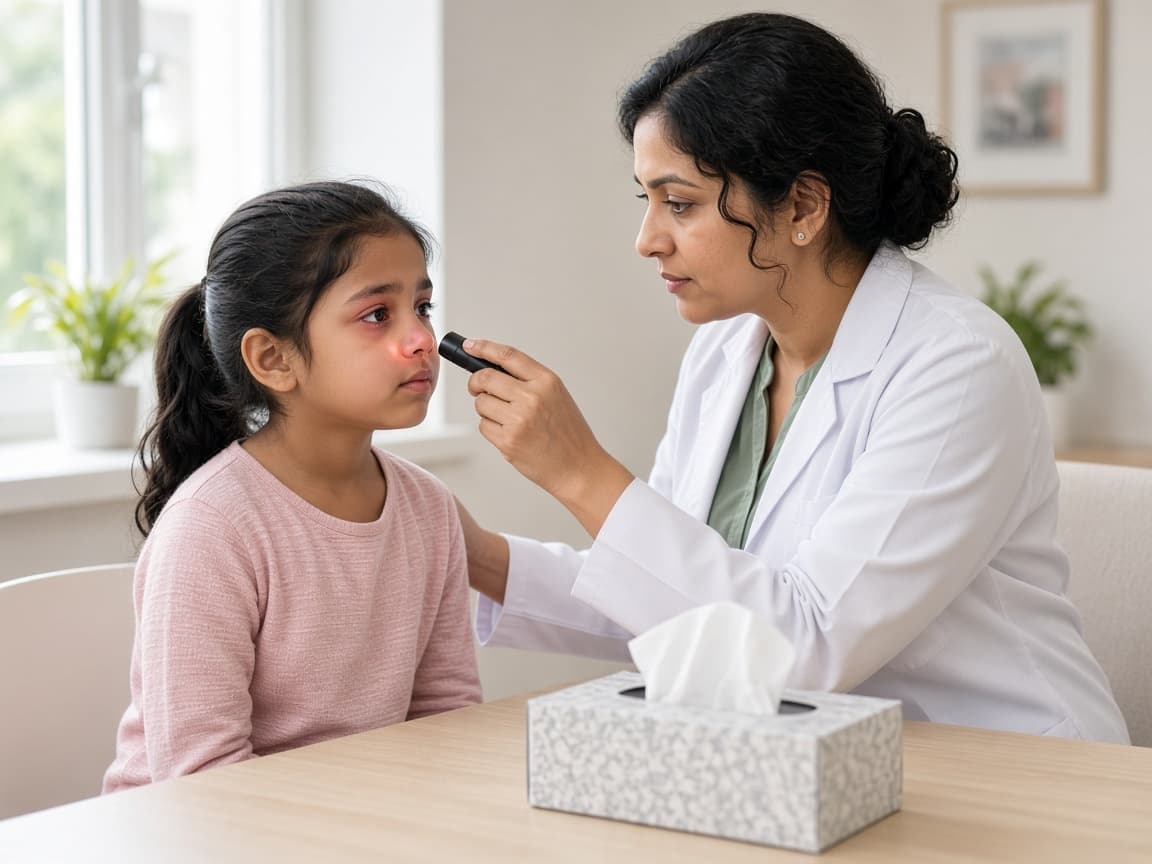
Allergy assessment explores sneezing, itchy eyes, skin rashes, food reactions, seasonal flares, and breathing discomfort that may relate to allergic triggers. A detailed history often matters as much as examination, because timing, location, and food or environmental exposures can reveal useful patterns. Parents leave with practical ideas for reducing avoidable exposures where appropriate, without unsupported claims about complete allergen elimination from daily life.
Not every sneeze or rash is allergy, and not every allergy needs extensive testing on the first visit. Thoughtful paediatric review helps decide whether observation, environmental measures, dietary review, or further evaluation is the most helpful next step. Guidance stays realistic for Hyderabad’s climate and urban living, including dust, pollen seasons, and common household exposures that families actually encounter.
When allergic symptoms affect feeding, sleep, or breathing effort, earlier review is wise. Clear counselling also covers warning signs of severe allergic reactions. Difficulty breathing, facial swelling, persistent vomiting after a known trigger, or sudden collapse require immediate emergency medical care. Clinic guidance complements, rather than replaces, urgent care when those red flags appear. Caregivers are reminded that smoke exposure, strong fragrances, and dusty renovation work can aggravate sensitive airways, and reducing those exposures is a practical step alongside clinical follow-up.