

01
Acute illness assessment
Acute illness assessment provides timely review when a child suddenly develops fever, breathing discomfort, vomiting or marked change in activity. Evaluation focuses on severity, hydration and warning signs that need urg
Service 10
Acute illness assessment and post-hospitalization follow-up - with clear guidance on when emergency care should not wait.

At a glance
Service overview
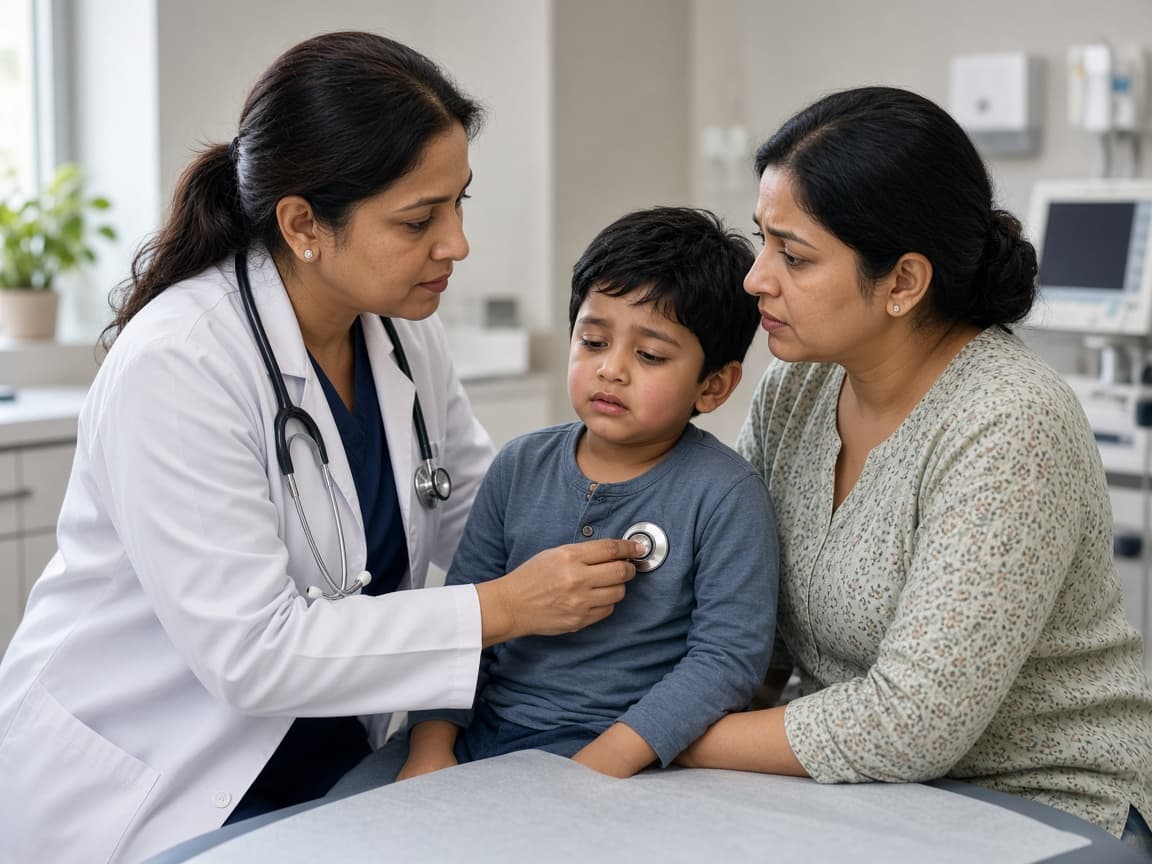
Pediatric emergency and follow-up care bridges urgent clinic review for acute illness with structured monitoring after hospital discharge. It is not a substitute for emergency facilities when life-threatening signs are present.
Children needing urgent clinic review or follow-up after hospitalization or acute illness.
Timely, clear pediatric guidance helps families manage concerns confidently and know when closer attention is needed.
Key benefits
Faster assessment when symptoms cannot wait for a routine slot.
Clear signs that mean emergency care is required now.
Review of medicines, feeding and recovery after hospital care.
Ongoing monitoring for longer-term health needs.
Structured follow-up so improvement stays on track.
Calm guidance during stressful illness moments.
What is included
Acute illness assessment provides timely review when a child suddenly develops fever, breathing discomfort, vomiting or marked change in activity. Evaluation focuses on severity, hydration and warning signs that need urg

Urgent pediatric consultation helps families address concerning symptoms that cannot wait for a routine appointment but may not always require emergency facilities. The visit prioritizes careful assessment, clear communi
Post-hospitalization follow-up reviews recovery after inpatient care, including medicines, feeding, activity and any pending investigations. The visit helps families understand what improvement should look like and which
How it works
Tell us what you have noticed - symptoms, feeding, sleep, growth or development questions.
A careful history and examination help clarify likely causes and urgency.
You receive practical home guidance, warning signs and follow-up timing.
We outline when to return, call, or seek emergency care if things change.
Why choose us
Fellowship-trained newborn expertise that strengthens early childhood care.
Recommendations grounded in current pediatric practice - without exaggerated claims.
Time to ask questions and leave with a plan you understand.
Evening clinic hours at Magenta Superspeciality Clinics, Puppalaguda.
In-depth guide
Educational information to help parents understand this area of care. It does not replace a personal medical consultation.
Pediatric emergency and follow-up care at Dr. Lavanya Kids Care in Puppalaguda helps families navigate acute illness assessment and recovery after hospital care. Parents from Manikonda and nearby Hyderabad areas often need clear guidance during stressful moments: Is this something that can be reviewed urgently in clinic, or does it require immediate emergency medical care? Responsible counseling answers that question with safety first.
Acute symptoms such as high fever, breathing discomfort, repeated vomiting, marked lethargy, or sudden change in activity deserve timely evaluation. The clinic focuses on severity assessment, hydration status, and warning signs that need escalation. Families receive practical instructions for the hours ahead when home monitoring is appropriate, and unambiguous direction when emergency facilities are the safer choice.
This service is not a substitute for ambulance or hospital emergency departments when red flags are present. Severe breathing difficulty, unresponsiveness, prolonged seizures, blue discoloration, or suspected serious injury should prompt immediate emergency medical care without waiting for a clinic appointment. Families are coached to keep a simple illness log during acute episodes, noting fever timing, fluid intake, breathing effort, and medicines given, which improves both home decisions and clinic follow-up quality.
Acute illness assessment provides timely review when a child suddenly develops fever, breathing discomfort, vomiting, rash with unwell appearance, or a marked change in energy. Evaluation prioritises clinical severity over parental self-blame or internet comparisons. Parents leave knowing what to watch, what supportive measures may help, and when to return or escalate.
Children can deteriorate or improve quickly, so guidance emphasises re-assessment triggers. A child who looked manageable in the morning may need urgent help by evening if breathing effort rises or fluid intake collapses. Clear thresholds reduce hesitation during night hours when anxiety is highest.
Communication stays calm and specific. Vague reassurance without criteria helps no one; alarm without a plan helps no one either. The clinic aims for measured language that supports decisive action when needed and steadier home care when that is clinically appropriate. After hospital discharge, medicine timing charts and red-flag cards are reviewed aloud so every caregiver in the household hears the same instructions before the first night home.
A complete urgent-care conversation ends with three anchors: what to do now, what to watch overnight, and where to go if warning signs appear. That triad reduces ambiguity for grandparents and alternate caregivers who may take over after clinic hours. Recovery follow-up then confirms whether those anchors worked, refining them for the next illness. Throughout, Dr. Lavanya Kids Care maintains a medically responsible stance-no inflated outcome claims-while insisting that severe distress always belongs in emergency medical care first.
Urgent pediatric consultation addresses concerning symptoms that cannot wait for a routine slot but may not always require emergency facilities. The visit prioritises careful assessment, clear communication, and rapid decision-making about next steps. Parents receive practical instructions for monitoring and explicit signs that mean emergency care is needed.
This middle pathway matters for families who feel stuck between “wait and see” and rushing to a crowded emergency department. Thoughtful triage-style clinical judgement helps direct children to the right level of care. When uncertainty remains high or warning signs emerge during the visit, escalation advice is given promptly.
Living near Magenta Superspeciality Clinics on Pipeline Road can make urgent review more accessible for local families, yet geography never overrides clinical urgency. If a child collapses, struggles to breathe, or cannot be awakened normally, seek emergency medical care immediately regardless of clinic proximity. Transport planning is discussed when relevant: knowing how to reach emergency facilities quickly matters as much as recognizing the clinical signs that mean you should go.
When multiple acute episodes occur in a short period, the clinic reviews growth, hydration baseline, immunization status where relevant, and caregiver understanding of action plans so repeated urgency is not treated as isolated bad luck alone. Strengthening prevention and earlier non-emergency review can reduce avoidable late presentations while preserving rapid emergency medical care for true red-flag illness.
Post-hospitalization follow-up reviews recovery after inpatient care, including medicines, feeding, activity, wound or device care when relevant, and any pending investigations. The visit helps families understand what improvement should look like and which symptoms need prompt attention. Structured guidance supports a safer transition from ward routines back to home life.
Discharge papers can feel overwhelming after sleepless nights in hospital. Clinic follow-up translates those instructions into day-to-day plans: how to space medicines, what feeding to expect, when school return is reasonable, and which warning signs should send the family back for urgent help. Continuity reduces the chance that important details are missed in the first week home.
Some children bounce back quickly; others need staged recovery with closer check-ins. Honest expectations prevent discouragement when energy returns gradually. If new emergency features appear after discharge-severe breathing distress, uncontrolled seizures, or sudden deterioration-immediate emergency medical care remains the correct response. Emotional recovery for parents after a frightening illness is acknowledged; calm follow-up visits help rebuild confidence while still reinforcing that vigilance for true emergencies remains essential.
A complete urgent-care conversation ends with three anchors: what to do now, what to watch overnight, and where to go if warning signs appear. That triad reduces ambiguity for grandparents and alternate caregivers who may take over after clinic hours. Recovery follow-up then confirms whether those anchors worked, refining them for the next illness. Throughout, Dr. Lavanya Kids Care maintains a medically responsible stance-no inflated outcome claims-while insisting that severe distress always belongs in emergency medical care first.
Chronic childhood condition management within this service focuses on follow-through after acute flares or hospital events. Children with recurrent wheeze, complex feeding needs, or other ongoing issues often need both urgent review during flare-ups and structured follow-up afterward. Linking those episodes into one coherent plan helps families feel less fragmented.
Visits may review trigger patterns, medicine adherence when prescribed, school participation, and early warning signs unique to that child. The aim is fewer surprises and clearer action steps, not claims of permanent elimination of every flare. Progress is measured in practical terms: better sleep, fewer emergency escalations, and more confident caregivers.
Coordination matters. When hospital teams, clinic follow-up, and home caregivers share the same understanding of red flags, children are safer. Dr. Lavanya Kids Care emphasises written clarity and spoken explanation so instructions survive the stress of acute illness weeks. Shared decision-making covers school return timing, play restrictions when needed, and when routine activities can safely resume after an acute event or hospitalization.
Home monitoring advice is only useful when it includes specific escalation criteria. Families learn how to watch breathing effort, urine output, alertness, fever pattern, and feeding tolerance in age-appropriate ways. They also learn which combinations of symptoms mean the plan has changed from observation to urgent action.
Parents in Puppalaguda and Manikonda often manage illness overnight while balancing work and other children. Simple checklists and plain-language thresholds are more helpful than dense medical jargon. The clinic reinforces that seeking emergency medical care early for true red flags is responsible parenting, not overreaction.
Follow-up after an urgent episode closes the loop. Reviewing what happened, what helped, and what to do differently next time builds family readiness. That learning reduces panic in future illnesses while keeping safety standards high. For children with repeated urgent visits, pattern review looks for preventable contributors such as missed follow-up, unclear action plans, or unrecognized triggers that deserve structured attention.
When multiple acute episodes occur in a short period, the clinic reviews growth, hydration baseline, immunization status where relevant, and caregiver understanding of action plans so repeated urgency is not treated as isolated bad luck alone. Strengthening prevention and earlier non-emergency review can reduce avoidable late presentations while preserving rapid emergency medical care for true red-flag illness.
Pediatric emergency and follow-up care at Dr. Lavanya Kids Care is designed as a continuum: timely assessment of acute concerns, clear escalation to emergency services when needed, and structured recovery support afterward. Families deserve both speed of judgement and depth of explanation, especially after frightening nights or hospital stays.
No clinic can ethically promise that every acute illness will resolve without complications. What responsible care can offer is careful assessment, honest counseling, practical home plans, and unambiguous emergency guidance. That combination helps children recover with fewer avoidable delays and helps parents feel oriented rather than alone.
For severe breathing difficulty, unresponsiveness, prolonged seizures, suspected serious injury, or rapid deterioration, seek immediate emergency medical care. For post-hospital recovery questions, urgent-but-stable concerns, and chronic flare follow-through, clinic-based review near Pipeline Road supports safer continuity across Puppalaguda, Manikonda, and surrounding Hyderabad communities.
Returning for scheduled follow-up after an acute event is one of the most useful steps families can take. It confirms recovery trajectory, adjusts unfinished plans, and reinforces warning signs before the next illness season arrives. Continuity turns isolated crises into informed, calmer preparedness for the future. The clinic reiterates that responsible urgent care means choosing the right level of help quickly-emergency medical care for red flags, and timely pediatric follow-up for recovery and prevention thereafter. A complete urgent-care conversation ends with three anchors: what to do now, what to watch overnight, and where to go if warning signs appear. That triad reduces ambiguity for grandparents and alternate caregivers who may take over after clinic hours. Recovery follow-up then confirms whether those anchors worked, refining them for the next illness. Throughout, Dr. Lavanya Kids Care maintains a medically responsible stance-no inflated outcome claims-while insisting that severe distress always belongs in emergency medical care first.
FAQs
Educational answers to help you prepare - not a substitute for personalized medical care.
If your child shows emergency warning signs - severe breathing difficulty, unresponsiveness, or sudden serious illness - seek immediate emergency medical care.
Medical review
Written and clinically reviewed by Dr. Alluwada Lavanya, MBBS, MD Pediatrics, Fellowship in Neonatology (NNF). Consultant Neonatologist & Pediatrician with 9+ Years of Experience serving families at Dr. Lavanya Kids Care, Puppalaguda, Hyderabad.
Related services
Careful evaluation and management of fever, infections, and common childhood illnesses.
Assessment for asthma, allergies, wheezing, and recurrent breathing concerns.
Thoughtful pediatric consultation for everyday concerns and ongoing child health.
Book a consultation
Appointments are available from Mon–Sat 6:00 PM – 9:00 PM · Sun 10:00 AM – 12:00 PM (by appointment). Evidence-based neonatal and pediatric consultation in Hyderabad.